



















































































































![In my last role at [Previous Company], I reduced cost-per-lead on Google Ads by 28% and improved conversions by 40% through campaign restructuring and remarketing. On social media, I boosted engagement by 45% and increased website traffic by 30% using interactive content and influencer collaborations.](https://www.asiaonemedia.com/wp-content/uploads/2025/09/Economy-India-and-UK-Partner-for-Sustainable-Smart-Cities-1024x580.jpg)




















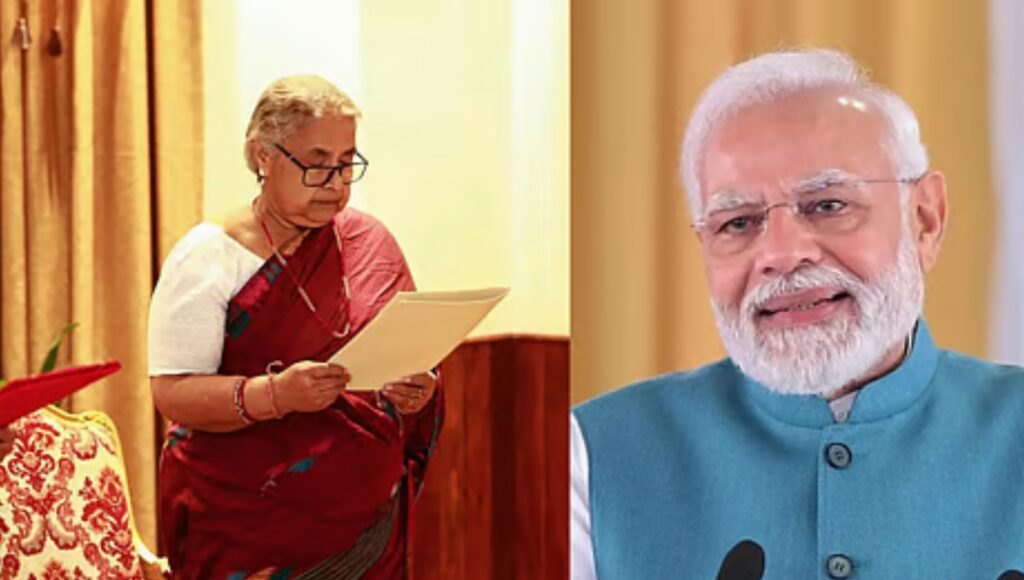


















































Mr. Rajat Raj Shukal, AsiaOne Magazine’s Global Head, interacts with Smt. Tara Gandhi Bhattacharjee on Gandhian Values, Social Reform, and Cultural Empowerment

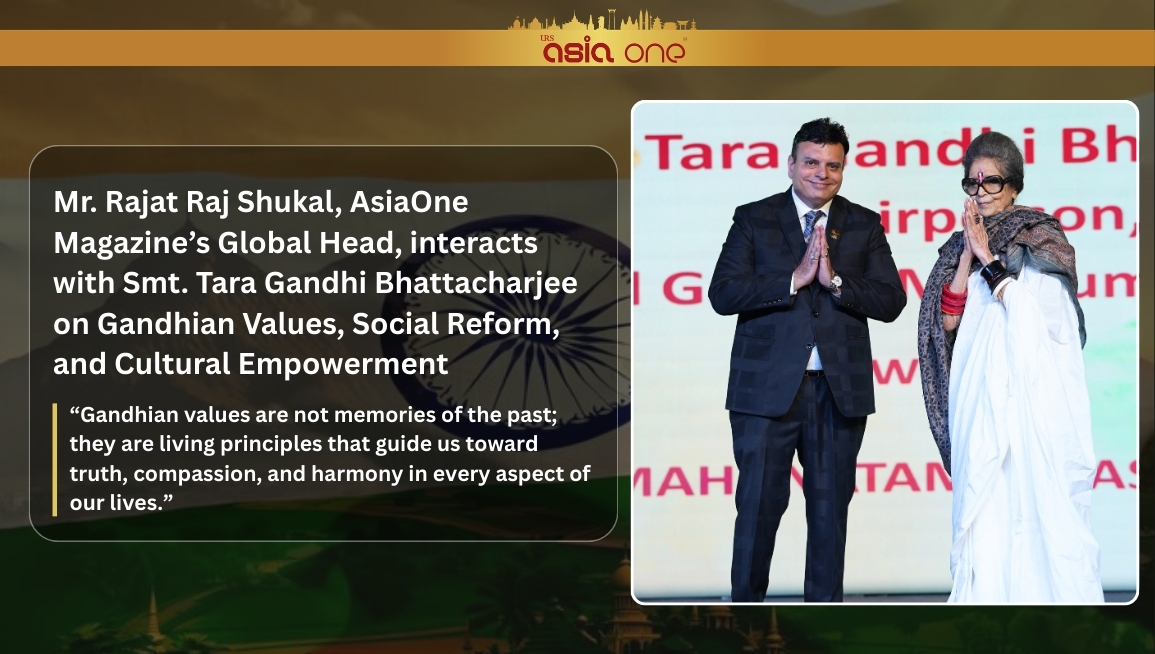
“Gandhian values are not memories of the past; they are living principles that guide us toward truth, compassion, and harmony in every aspect of our lives.” — Smt. Tara Gandhi Bhattacharjee
At a time when the world is experiencing social transformations, ethical dilemmas, and cultural transitions, Gandhian philosophy seems more relevant than ever. Mr. Rajat Raj Shukal, Global Head and Principal Partner of AsiaOne Magazine, had a thought-provoking interaction with renowned humanitarian, author, and peace advocate Smt. Tara Gandhi Bhattacharjee, who discussed how Gandhian ideas are still influencing modern society. The dialogue reflected not just on historical wisdom but also on how it may be applied today to shape ethical leadership, cultural consciousness, and inclusive progress.
Opening the discussion, Mr. Shukal observed that in times of uncertainty, society frequently reverts to foundational principles for clarity. Truth, compassion, and accountability, he noted, are becoming increasingly important in building resilient communities. His reflections set the stage for Smt. Bhattacharjee to elaborate on why Gandhian ideals remain deeply relevant. According to her, these values have endured because they appeal to people’s moral consciences, encouraging self-reflection while guiding collective progress.
Rediscovering Nonviolence in a Complex World
As the conversation evolved, attention turned naturally to Ahimsa, or nonviolence, one of the most profound aspects of Gandhian philosophy. Mr. Shukal invited Ms. Bhattacharjee to offer her thoughts on how nonviolence may be practised in today’s more polarised environment. She described Ahimsa not as passive avoidance of conflict but as a conscious commitment to empathy, emotional discipline, and understanding.
She explained that nonviolence begins with thought, shaping words and acts that influence relationships and communities. For younger generations looking for practical meaning in philosophical teachings, this method offers clarity and direction. Courage and empathy, she stressed, are essential qualities that enable people to overcome differences respectfully while maintaining dignity. Her insights highlighted how nonviolence is still a great instrument for personal growth and social harmony.
Satyagraha as a Pathway for Ethical Change
Building on the idea of nonviolence, the dialogue moved seamlessly to Satyagraha, which Smt. Bhattacharjee stated was the moral foundation for Gandhian action. Satyagraha, founded on truth and strengthened by mental resilience, promotes discussion over confrontation and understanding over force. She added that this philosophy rejects violence in thought, expression, and action, instead advocating constructive involvement as a means of achieving justice.
Mr. Shukal remarked on the growing relevance of peaceful advocacy in contemporary movements around the world. In response, Smt. Bhattacharjee stated that Satyagraha continues to inspire individuals and communities seeking equality and human dignity. According to her, this perspective fosters patience and determination, demonstrating that ethical commitment, rather than aggression, drives sustainable change.
Grassroots Empowerment and Social Responsibility
The discussion then shifted to the practical application of Gandhian ideals via grassroots initiatives. Smt. Bhattacharjee discussed her long-standing association with the Kasturba Gandhi National Memorial Trust, including how education and vocational programmes have empowered rural women and children across India. She pointed out that Gandhian ideology places individual accountability at the centre of social reform, urging people to contribute to community development.
Mr. Shukal acknowledged the transformative effect of such initiatives, noting how they bridge societal gaps while promoting dignity and self-reliance. Smt. Bhattacharjee emphasised the need for compassion, simplicity, and service in achieving sustainable progress. She said that when inclusiveness becomes a shared value, communities tend to move toward harmony and mutual respect.
Khadi and Cultural Consciousness
A further significant subject emerged: cultural empowerment, particularly through the symbolism of Khadi and Charkha. Smt. Bhattacharjee described Khadi as a symbol of mindful living, creativity, and self-reliance. Beyond its historical significance, she observed that the act of spinning cultivates patience while creating a sense of being connected to both community and environment.
Mr. Shukal observed that the global sustainability movement has renewed interest in traditional practices. Smt. Bhattacharjee agreed that Khadi promotes conscious consumption, preserves cultural heritage, and reflects the balance between progress and preservation.
Personal Reflections and Living Legacy
The dialogue also touched upon Smt. Bhattacharjee’s book, Reflections of an Extraordinary Era, which provides intimate glimpses into Mahatma Gandhi’s daily life and leadership. She said that these memories show his humility, discipline, and unshakeable commitment to equality, revealing a genuinely personal aspect to a globally revered figure.
Inspiring the Youth through Mindfulness
Addressing the aspirations of younger generations, Smt. Bhattacharjee emphasised the importance of mental clarity and emotional balance. She urged young people to practise mindfulness by reducing negativity and focusing on constructive thoughts. According to her, a calm and focused mind boosts creativity, resilience, and the ability to make meaningful contributions to society.
She also recommended reading Gandhian literature to better comprehend the philosophical foundation of truth and nonviolence. Such involvement, she explained, fosters ethical decision-making while also instilling a deeper sense of social responsibility.
A Shared Vision for a Compassionate Future
As the conversation concluded, Mr. Rajat Raj Shukal complimented Smt. Tara Gandhi Bhattacharjee’s unwavering commitment to peace, culture, and social equity. Both believed that Gandhian philosophy continues to provide useful guidance for dealing with contemporary issues while fostering compassion and social well-being.
This profound interaction exemplified AsiaOne Magazine’s dedication to encouraging conversations that promote reflection, cultural awareness, and responsible leadership. By bridging the wisdom of tradition with the demands of modern progress, such conversations encourage individuals and communities to work toward a future rooted in empathy, inclusivity, and harmony.
FAQs
- Who is Smt. Tara Gandhi Bhattacharjee?
Smt. Tara Gandhi Bhattacharjee, Mahatma Gandhi’s granddaughter, is a humanitarian, author, and peace advocate who works to promote social equality, cultural awareness, and Gandhian values through education and community projects.
- What was the focus of her interaction with Mr. Rajat Raj Shukal?
Their discussion centred on Gandhian values, nonviolence, ethical leadership, cultural empowerment, grassroots development, and the importance of truth and compassion in tackling contemporary societal issues.
- Why are Gandhi’s principles relevant today?
Gandhian ideas are still relevant today because they promote truth, empathy, accountability, and peaceful coexistence while providing ethical guidance for nations navigating rapid change, conflict, and cultural transformation.
- How does Smt. Bhattacharjee interpret nonviolence today?
She views nonviolence as an intentional, active practice rooted in empathy, emotional discipline, and understanding, enabling people to resolve conflicts peacefully while maintaining dignity and mutual respect.
- What is Satyagraha, according to Smt. Bhattacharjee?
Satyagraha is a commitment to truth and ethical action that rejects violence in thought and behaviour while fostering discussion, resilience, and constructive involvement in the pursuit of justice and social harmony.
- How does she contribute to grassroots empowerment?
Through her work with the Kasturba Gandhi National Memorial Trust, she promotes education, vocational training, and social programmes that empower rural women and children throughout India.
- What are her thoughts on Khadi and cultural empowerment?
She sees Khadi as a sign of self-reliance, mindful living, and sustainability, encouraging conscious consumption while maintaining cultural heritage and fostering communal connections.
- What message does she have for the youth?
She encourages young people to practise mindfulness, eliminate negativity, and read Gandhian literature to improve their ethical decision-making, emotional resilience, and sense of social duty.
- What role does AsiaOne Magazine play in these discussions?
AsiaOne Magazine provides a platform for influential conversations by promoting leadership insights, cultural awareness, and socially impactful narratives that encourage responsible decision-making and progressive thinking.
- How does AsiaOne Magazine promote thought leadership?
AsiaOne promotes meaningful discussions with global leaders, encouraging innovation, ethical leadership, cultural understanding, and collaborative approaches to sustainable development.